Don't Buy the P Series Quantum X 2019 Until You Read This Full Analysis
When VIZIO announced the P-Series Quantum X (PX-Series) in 2019, it wasn't just another incremental update to their television lineup. It was a shot across the bow of the premium display market, specifically targeting the high-end territory long dominated by Samsung’s QLEDs and Sony’s flagship LED models. For years, VIZIO had been known as the "value king," but the Quantum X was designed to be the "performance king." However, as the 2019 model has aged and the secondary market or refurbished stock continues to circulate, potential buyers find themselves at a crossroads. Is a former flagship from 2019 still a viable contender in a world of Mini-LED and OLED dominance? This analysis dives deep into the technical architecture, real-world performance, and long-term value proposition of the P-Series Quantum X 2019 to help you decide if this legendary light cannon belongs in your living room.
The Engineering Philosophy: Peak Brightness Above All
The primary story of the P-Series Quantum X 2019 revolves around its unprecedented luminance. At the time of its release, VIZIO claimed a staggering peak brightness of 3,000 nits. To put that in perspective, many high-end televisions today still struggle to cross the 1,500-nit threshold. VIZIO achieved this through a combination of a sophisticated Full Array Local Dimming (FALD) backlight system and the use of Quantum Dots. By using a specialized film of cadmium-free microscopic crystals, the TV can produce colors that are more saturated and a backlight that is significantly more efficient.
However, brightness is a double-edged sword. To manage 3,000 nits of potential output, a TV needs a massive amount of cooling and highly precise dimming zone control. The 65-inch model features 384 local dimming zones, while the 75-inch model boasts 480 zones. For 2019 benchmarks, these numbers were industry-leading for a consumer LCD. The goal was simple: provide the high-impact "pop" of HDR content that mimics the sun's glare or the shimmer of chrome, without washing out the deep blacks that movie enthusiasts crave.
Picture Quality Analysis
High Dynamic Range (HDR) Performance
In the realm of HDR, the P-Series Quantum X 2019 remains a beast. It supports every major format, including Dolby Vision, HDR10+, HDR10, and HLG. Because it has such a high ceiling for brightness, it does not need to resort to aggressive tone mapping as often as dimmer displays. When you watch a scene with a bright explosion or a sunset, the Quantum X can represent the specular highlights with almost jarring realism. This makes it an exceptional choice for bright rooms where ambient light usually kills the HDR effect.
Black Levels and Contrast
While it cannot match the infinite contrast of an OLED, the Quantum X 2019 uses its 384 to 480 zones effectively. In "Calibrated Dark" mode, the black levels are surprisingly deep for a VA (Vertical Alignment) panel. VIZIO's local dimming algorithm in 2019 was aggressive, often prioritizing black depth over shadow detail. This results in what some call "crushed blacks," where the fine details in a dark tuxedo or a shadowy corner are lost to total darkness. However, for the average viewer, the high contrast ratio provides a very "inky" look that makes the colors stand out.
Color Accuracy and Volume
Thanks to the Quantum Dot layer, the color volume on this set is massive. It covers nearly 100% of the DCI-P3 color space, which is the standard for digital cinema. Out of the box, VIZIO's "Calibrated" and "Calibrated Dark" presets are remarkably accurate, though there is a slight tendency toward a cooler (bluer) color temperature in the whites. Skin tones look natural, and the greens in nature documentaries are vivid without looking like neon radioactive sludge.
The SmartCast Experience: A Blessing and a Curse
The 2019 era of VIZIO’s SmartCast platform was a transitional period. Unlike Roku or Android TV, SmartCast is essentially a web-based interface. While this allows VIZIO to push updates and add apps without requiring user downloads, it also makes the interface feel sluggish compared to dedicated streaming sticks. One of the major gripes for users of this model is the boot time and the occasional lag when switching between built-in apps like Netflix or YouTube.
Shop the latest TVs & Home Theater picks on Amazon.
See Deals →On the positive side, the 2019 Quantum X was among the first to receive robust support for Apple AirPlay 2 and HomeKit, alongside its existing Google Chromecast built-in functionality. This makes it a highly flexible hub for users who prefer to "cast" content from their phones rather than navigating a TV menu with a remote. If you plan on buying this TV today, the consensus is to pair it with an external streaming device like an Apple TV 4K or a Shield TV to bypass the aging internal software.
Gaming Real-World Use Cases
For gamers, the P-Series Quantum X 2019 was a forward-thinking machine, but it lacks the modern HDMI 2.1 features that became standard a year later. It features a 120Hz native refresh rate, which is excellent for motion clarity in sports and high-action games. However, it does not support Variable Refresh Rate (VRR) or 4K at 120Hz. If you are a competitive gamer with a PlayStation 5 or Xbox Series X, you will be limited to 4K at 60Hz or 1080p at 120Hz.
Input lag is noticeably low on HDMI port 5, which VIZIO specifically designed as a high-speed gaming port. In "Game Mode," the lag sits around 15ms to 20ms for 4K/60Hz signals. This is more than adequate for most players, providing a responsive experience in shooters and racing games. The high brightness also helps tremendously in identifying enemies in dark environments, a common frustration on dimmer screens.
Comparison of Specifications
| Feature | P-Series Quantum X (2019) | Standard P-Series (2019) | Modern Mid-Range LED (2024) |
|---|---|---|---|
| Peak Brightness | Up to 3,000 Nits | Up to 1,000 Nits | 800 - 1,200 Nits |
| Local Dimming Zones | 384 - 480 | 200 | 500 - 1,000 (Mini-LED) |
| Refresh Rate | 120Hz Native | 120Hz Native | 120Hz / 144Hz |
| HDMI Version | HDMI 2.0 | HDMI 2.0 | HDMI 2.1 |
| Color Engine | Quantum Dot | Quantum Dot | Quantum Dot / NanoCell |
Pros and Cons
- Pro: Class-Leading Brightness – Reaches levels of luminance that allow HDR content to truly shine, even in sun-drenched rooms with many windows.
- Pro: Exceptional Color Saturation – The Quantum Dot film ensures that reds, greens, and blues are deep and vibrant, exceeding the capabilities of standard LED TVs.
- Pro: Effective Local Dimming – While older than Mini-LED tech, the high zone count provides excellent contrast and limits blooming (light bleeding) around bright objects.
- Pro: Design and Build Quality – Features a premium "bezel-less" design on three sides and a sturdy metal stand that feels significantly more expensive than entry-level VIZIO models.
- Con: Dated Smart Interface – SmartCast can be buggy and slow; an external streaming stick is almost mandatory for a frustration-free experience.
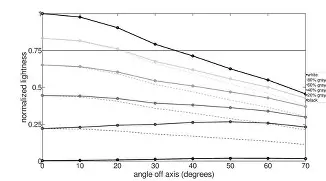
- Con: Narrow Viewing Angles – Specifically due to the VA panel, colors and contrast begin to shift and wash out if you are sitting at an angle rather than directly in front of the screen.
- Con: Absence of HDMI 2.1 – Lack of VRR and 4K/120Hz support may be a dealbreaker for owners of the latest gaming consoles.
- Con: Uniformity Issues – Some units suffer from the "Dirty Screen Effect" (DSE), where slight shadows are visible on large areas of solid color, like a hockey rink or a clear sky.
Buying Guide: Is It Still Worth It?
Buying a 2019 flagship in the current market requires a specific set of priorities. You aren't buying the Quantum X for its "smart" features or its gaming future-proofing; you are buying it for raw raw panel performance. Here is how to evaluate if it fits your needs.
Consider Your Environment
If your TV will be placed in a basement or a dedicated home theater room with total light control, you might be better off looking for a modern OLED or a Mini-LED with better shadow detail. However, if your TV is going into a living room with floor-to-ceiling windows, the P-Series Quantum X 2019 is one of the few displays capable of "punching through" that glare. Its anti-reflective coating is decent, but its brute-force brightness is its best defense against ambient light.
Check the Manufacturing Date and Usage
Because these TVs run very hot to achieve their high nit counts, the internal components (specifically the power board and the LED backlight strips) are under more stress than a standard TV. If you are buying used, ask about the hours of operation. A TV that has been running at 100% brightness in a commercial setting for five years may be nearing the end of its lifespan.
Looking for the best TVs & Home Theater deals on Amazon?
Browse Now →The "Silicon Lottery"
VIZIO has historically had some variance in panel uniformity. Before finalizing a purchase, it is highly recommended to run a "gray scale uniformity" test. You can find these on YouTube; they display various shades of gray to reveal any dark spots or banding. A "clean" panel of a P-Series Quantum X is a marvel to look at, but a "dirty" one can be distracting during sports broadcasts.
Audio Considerations
Like most modern thin televisions, the built-in speakers on the Quantum X are mediocre. They are downward-firing and lack any real bass response. The soundstage is narrow, and at high volumes, the chassis can sometimes rattle. Budget for a dedicated soundbar or a 3.1 channel home theater system. The TV supports ARC (Audio Return Channel), but not eARC, meaning it cannot pass uncompressed Dolby Atmos signals to a soundbar unless the source is plugged directly into the audio device first.
The Evolution of VIZIO Quality
It is worth noting that the 2019 model is often cited by enthusiasts as the peak of VIZIO's engineering. Subsequent models in 2020 and 2021 faced various software hurdles and hardware changes that some felt were steps backward. The 2019 version used a more robust SOC (System on a Chip) for image processing compared to earlier years, which helped with upscaling low-resolution content. If you find a 2019 model in good condition, it often outperforms newer mid-range TVs that cost significantly more.
Conclusion
The VIZIO P-Series Quantum X 2019 remains a fascinating piece of display history. It represents a moment when an underdog manufacturer decided to stop chasing the middle market and started chasing the crown. Its ability to produce blinding highlights and deep blacks makes it an HDR powerhouse that still holds its own against many of today's premium offerings. For the movie lover who wants cinematic impact without spending three times as much on a boutique brand, the Quantum X is a compelling choice.
However, the lack of modern gaming features and the aging SmartCast platform mean it isn't a "universal" recommendation. If you are a hardcore gamer or someone who demands the snappiest user interface, you will likely find more satisfaction elsewhere. Ultimately, the P-Series Quantum X 2019 is a specialist's tool. It is for the viewer who prioritizes raw brightness and color volume above all else. If you can find one in excellent condition and you're willing to add a $50 streaming 4K stick to handle the "smarts," you'll be rewarded with a visual experience that remains, even years later, truly spectacular.